
From lime-cured fish on the Pacific coast to potatoes grown at 4,000 metres, Peruvian food has become one of the world's most talked-about cuisines. Travellers now fly to Lima, Arequipa and Cusco as much for dinner as for ruins and landscape. In many countries around the world, that feast is still surprisingly little known.
Published on 26 November 2026.
How Peruvian food went global
The rise of Peruvian cuisine was not a sudden fashion, nor did it begin in a tasting-menu restaurant. It was built from markets, fishing boats, family recipes and regional kitchens that had been there all along. What changed, from the 1990s onwards, was the country's confidence in those flavours, and the skill with which cooks began to present them to the rest of the world.
No single chef created that shift, but few did more to give it a public face than Gastón Acurio. In 1994 he and the German-born pastry chef Astrid Gutsche opened Astrid & Gastón in Miraflores, Lima. It began in the French fine-dining style then expected of a serious Lima dining room, but within a few years Acurio was applying classical technique to ají peppers, native potatoes, seafood and everyday Peruvian plates. He took that message further through cookbooks and the television series Aventura Culinaria, which from 2002 sent him around the country to eat with home cooks, street vendors and farmers. He also helped found the Peruvian Society of Gastronomy (Apega) and backed the training of young cooks from modest backgrounds.
The other great stage was a fair. In 2008 PromPerú organised a gastronomic festival in Lima called Perú, Mucho Gusto. Apega took it over the following year, moved it and renamed it Mistura. For almost a decade, until its last main edition in 2017, Mistura brought chefs, traditional cooks, producers and huge public crowds into one place. A visitor could eat from a street cart in the same afternoon as sampling a celebrated restaurant kitchen.
That pride now has a long trail of official recognition. The World Travel Awards named Peru the World's Leading Culinary Destination every year from 2012 to 2019, and again every year from 2021 to 2025. (Italy took the title in 2020. The 2026 world winner had not been announced at the time of writing.) People do now travel to Peru specifically to eat: to queue for ceviche at lunch, to book months ahead at Lima's most decorated restaurants, and to look for regional plates that never appear on a short tourist menu.
The Pacific on a plate: ceviche and the coastal kitchen
If Peruvian cuisine has a single calling card, it is ceviche (often written cebiche in Peru). At its most classical it is almost austere: very fresh raw fish, cut to order, seasoned with salt and chilli, and "cooked" in a brief cure of lime juice. Red onion, often rinsed so that it stays crisp rather than harsh, goes over the top. The usual accompaniments are boiled sweet potato, cancha (toasted corn) and a chunk of choclo, the large-kernel Andean maize. A good ceviche should taste fresh, cold and clean. The fish is the centre, not a heavy marinade.
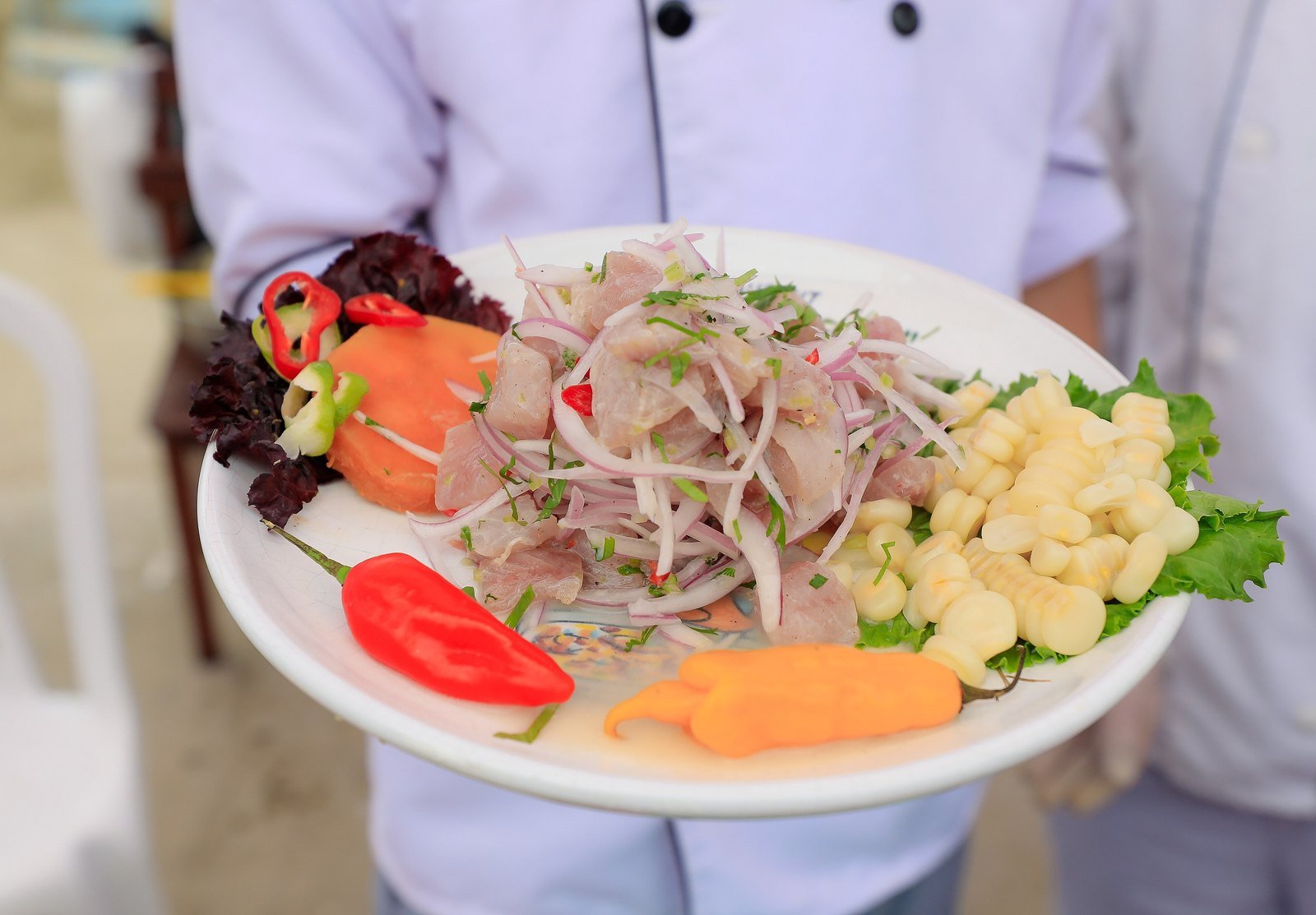
In December 2023 UNESCO inscribed "practices and meanings associated with the preparation and consumption of ceviche, an expression of Peruvian traditional cuisine" on its Representative List of the Intangible Cultural Heritage of Humanity. The honour was not for a single restaurant recipe. It recognised skills that run from artisanal fishing to the work of cooks in homes and cevicherías, including the traditional female cooks long central to those kitchens. Recipes change from region to region, and ceviche is prepared not only on the coast but in the Andes and the Amazon.
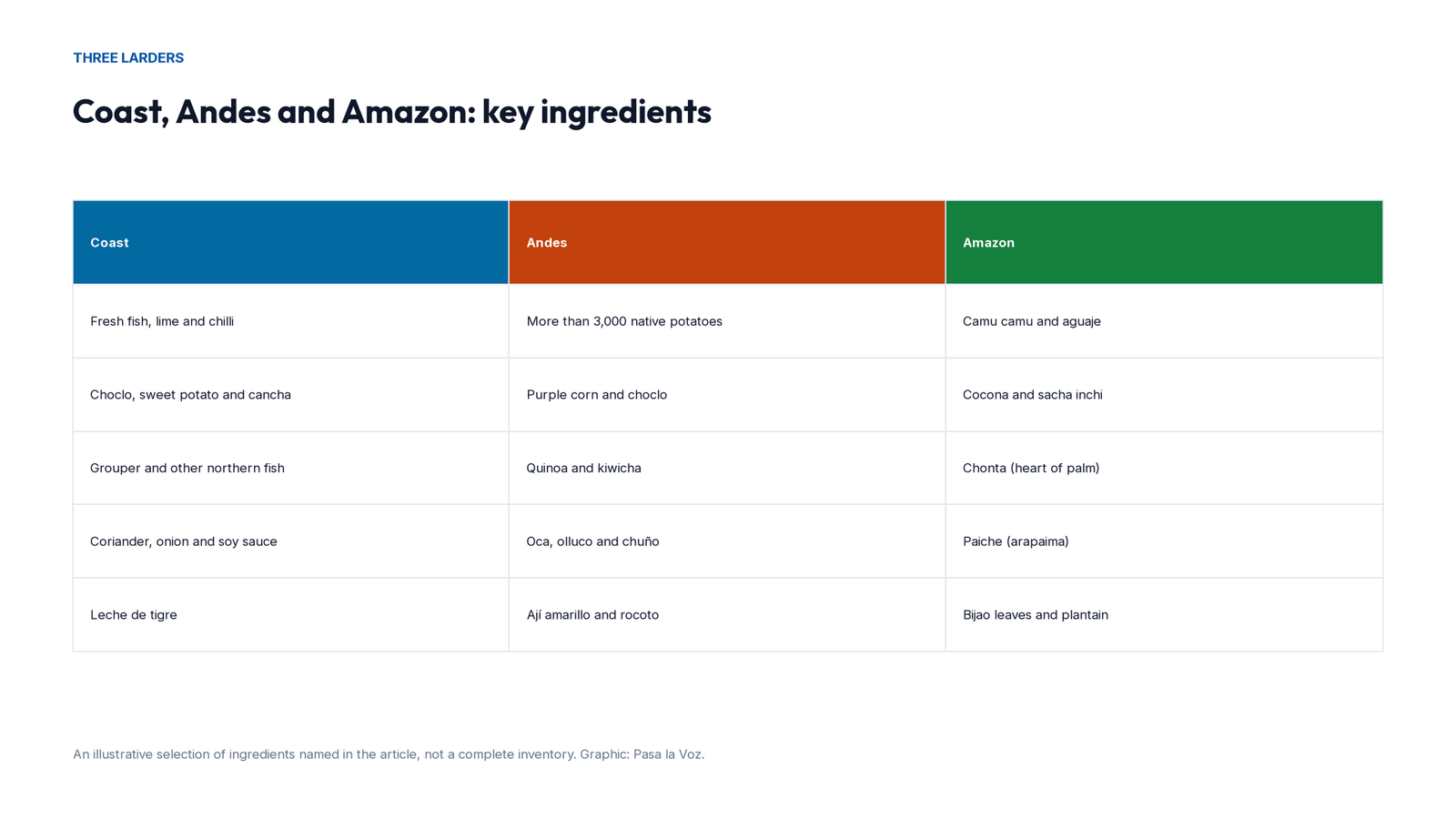
Around that centre sits a whole coastal repertoire. Leche de tigre , "tiger's milk", is the tangy, spicy liquid left by the cure: a shot of lime, chilli, onion and the essence of the fish. Peruvians drink it as an appetiser and, in popular lore, as a hangover remedy. Tiradito looks like a cousin of sashimi: the fish is sliced thinly, laid flat and dressed with a chilli sauce, usually without the heap of onion that defines ceviche. Jalea goes in the opposite direction, a crunchy pile of fried seafood served with salsa criolla, the relish of onion, lime and chilli. There is also chupe de camarones, a rich prawn chowder associated especially with Arequipa, thickened with milk, potatoes, cheese and often an egg; and arroz con mariscos, a fragrant seafood rice seasoned with cumin, garlic and ají rather than saffron. Farther north, warmer waters produce other classics, including ceviches made with mero (grouper).
What the Andes still grow: corn, potatoes and the Inca larder
Long before restaurants put Peruvian food on the world's lists, Andean farmers had already assembled one of the planet's great larders. The Inca state, and the cultures that preceded it, organised agriculture from irrigated coastal valleys to terraces in the thin air of the highlands. Native potatoes, quinoa and colourful corn are, in the Andes, everyday food with a very long memory.
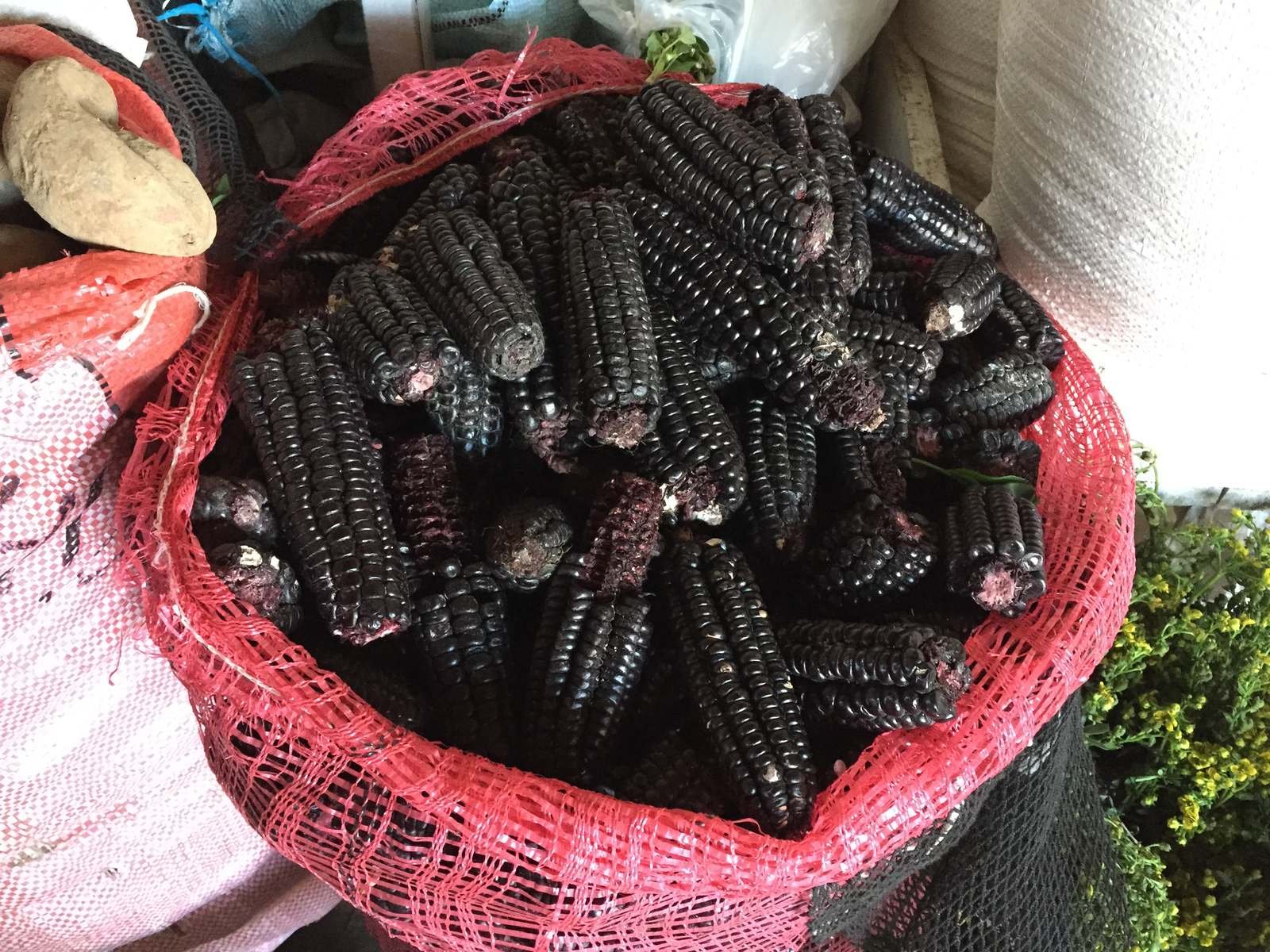
The corn comes in many forms. Choclo, the pale, large-kernel maize of the highlands, is boiled and often served with fresh cheese; the kernels are starchy and gently sweet, closer to a vegetable than to supermarket sweetcorn. Maíz morado , purple corn, is another matter: deep, almost black-violet cobs used to make the drink chicha morada and the dessert mazamorra morada.
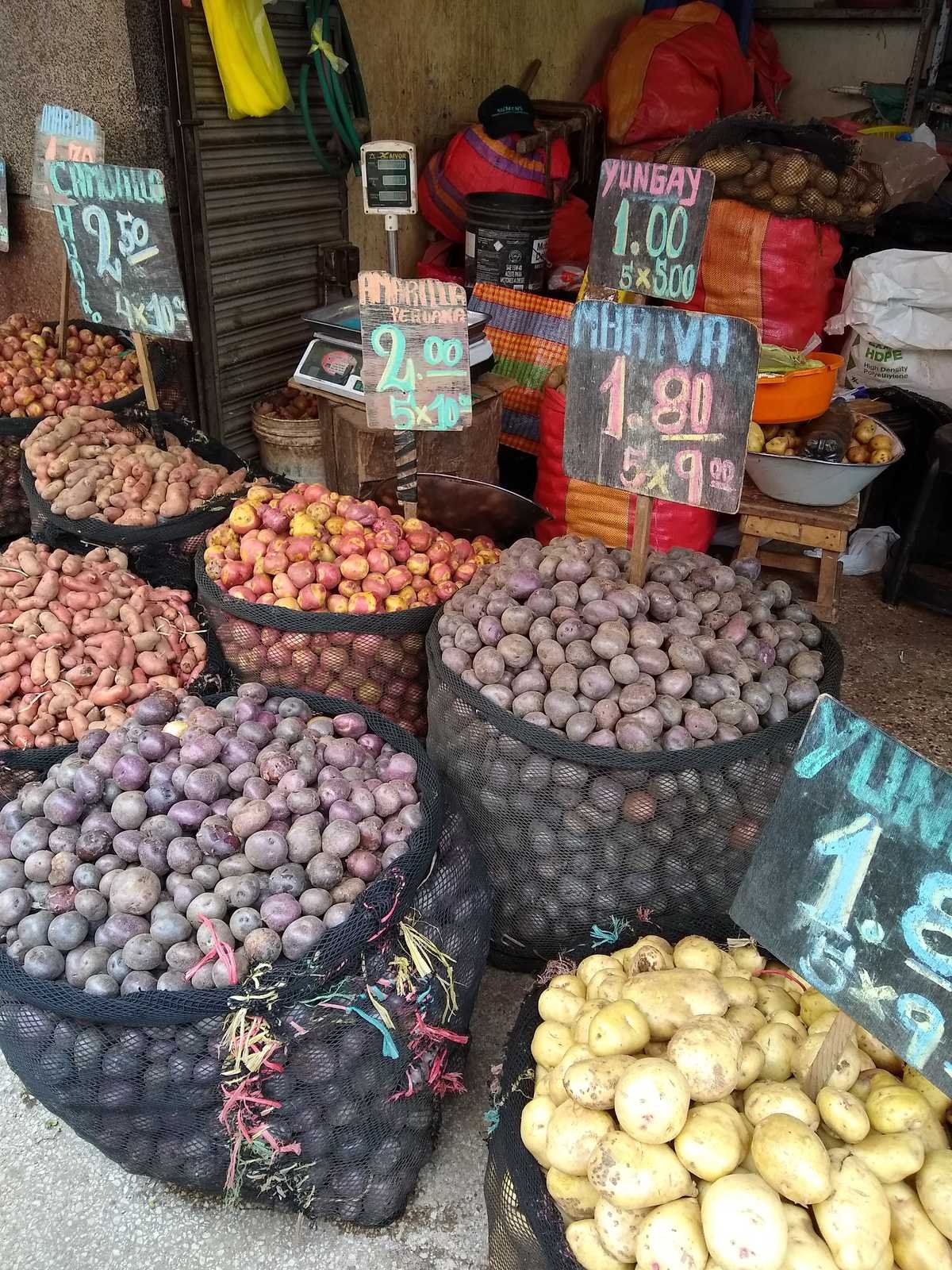
Then there are the potatoes. The International Potato Center, which is based in Peru and holds the world's largest potato collection, has long described Peru as home to more than 3,000 native potato landraces. Across the Andean highlands of Peru, Bolivia and Ecuador the same organisation speaks of more than 4,000 native varieties. They come in reds, yellows, deep purples and almost black skins, some floury, some waxy, some bitter enough that they are traditionally freeze-dried into chuño.
Quinoa and kiwicha (amaranth) are tiny, protein-rich seeds that can be simmered like a grain or popped. Oca and olluco are tubers with a bright, sometimes slightly lemony character; olluco is often cooked with meat in the stew olluquito con charqui. Chillies are not a garnish but a structure of flavour: ají amarillo, the yellow-orange pepper that gives so many sauces their colour and fruity heat, and rocoto, a round, apple-like chilli that can be fiercely hot and is stuffed whole in Arequipa. Tomatoes have deep roots here too. Peru's environment ministry has noted that the country hosts 14 of the world's 17 tomato species, most of them wild relatives; the Andes of western South America are a centre of that diversity.
The emblematic Andean feast is pachamanca, whose name in Quechua points to a pot in the earth. Meat, potatoes and other produce are cooked with hot stones in a buried oven, then uncovered as a shared meal.
Flavours from the Amazon
East of the Andes the kitchen changes again. In departments such as Loreto, Ucayali, San Martín and Madre de Dios, cooks work with river fish, plantains, palm fruits and leaves, and plants that barely appear in Lima markets, let alone on supermarket shelves abroad.
Some of those ingredients are now travelling farther than they used to. Camu camu, a small, extremely tart berry from the floodplain, is exceptionally rich in vitamin C and is increasingly sold as a pulp or powder. Aguaje, the fruit of a palm, has oily orange flesh and a flavour somewhere between carrot, pumpkin and tropical fruit. Cocona is acidic and tomato-like, used in sauces and juices. Sacha inchi, sometimes called the Inca peanut, is a star-shaped seed prized for its oil. Chonta, heart of palm, turns up in salads and older preparations.
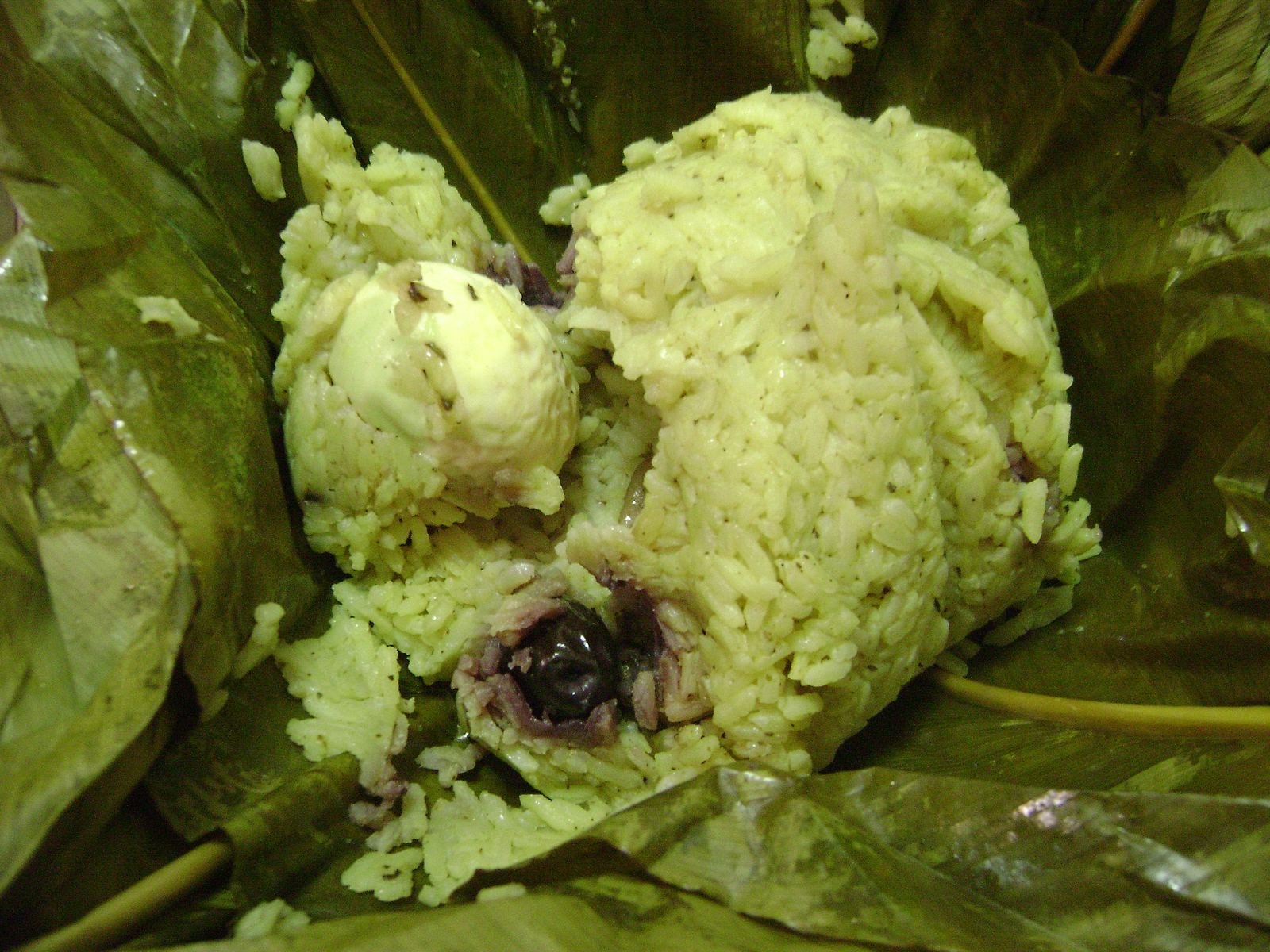
The rivers supply the protein. Paiche (also known as arapaima) is a vast freshwater fish, now more often farmed because wild stocks have been under pressure; its firm flesh takes well to grilling and to ceviche. Two land dishes are especially hard to miss. Juane, closely associated with the feast of San Juan in June, wraps seasoned rice and chicken (and sometimes egg and olive) in bijao leaves, then boils the bundle until it can be unwrapped like a gift. Tacacho con cecina is more rustic: roasted or fried plantain, mashed with drippings, served with smoked or salted pork and often a sausage. It is heavy, smoky and deeply satisfying.
A country of regional kitchens
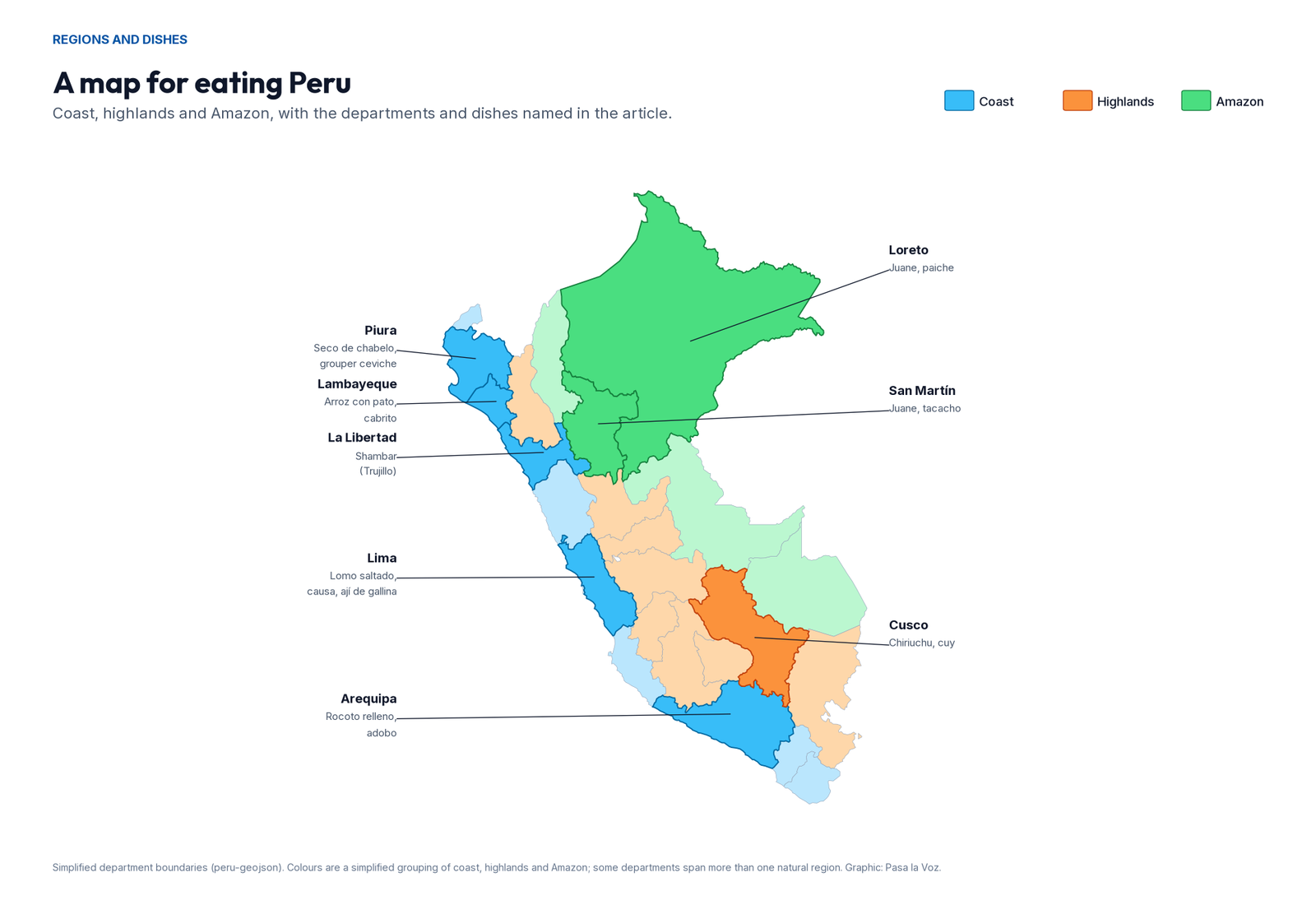
Peruvian food is not a single menu. The better way to eat is to travel, or at least to look for the regional names on a Lima blackboard.
Piura
In the far north, Piura cooks with plantain, yuca, goat and fish. Seco de chabelo (also spelled chavelo) mashes green plantain with cecina, dried or salted beef, into a savoury, almost earthy stew. Majado de yuca pounds boiled cassava with pork crackling until it is rich enough to be a meal on its own. The coast contributes cebiche de mero, made with grouper when the catch allows. For dessert there are natillas, a dense, caramel-leaning milk sweet made with chancaca (unrefined cane sugar) and rice flour.
Chiclayo and Lambayeque
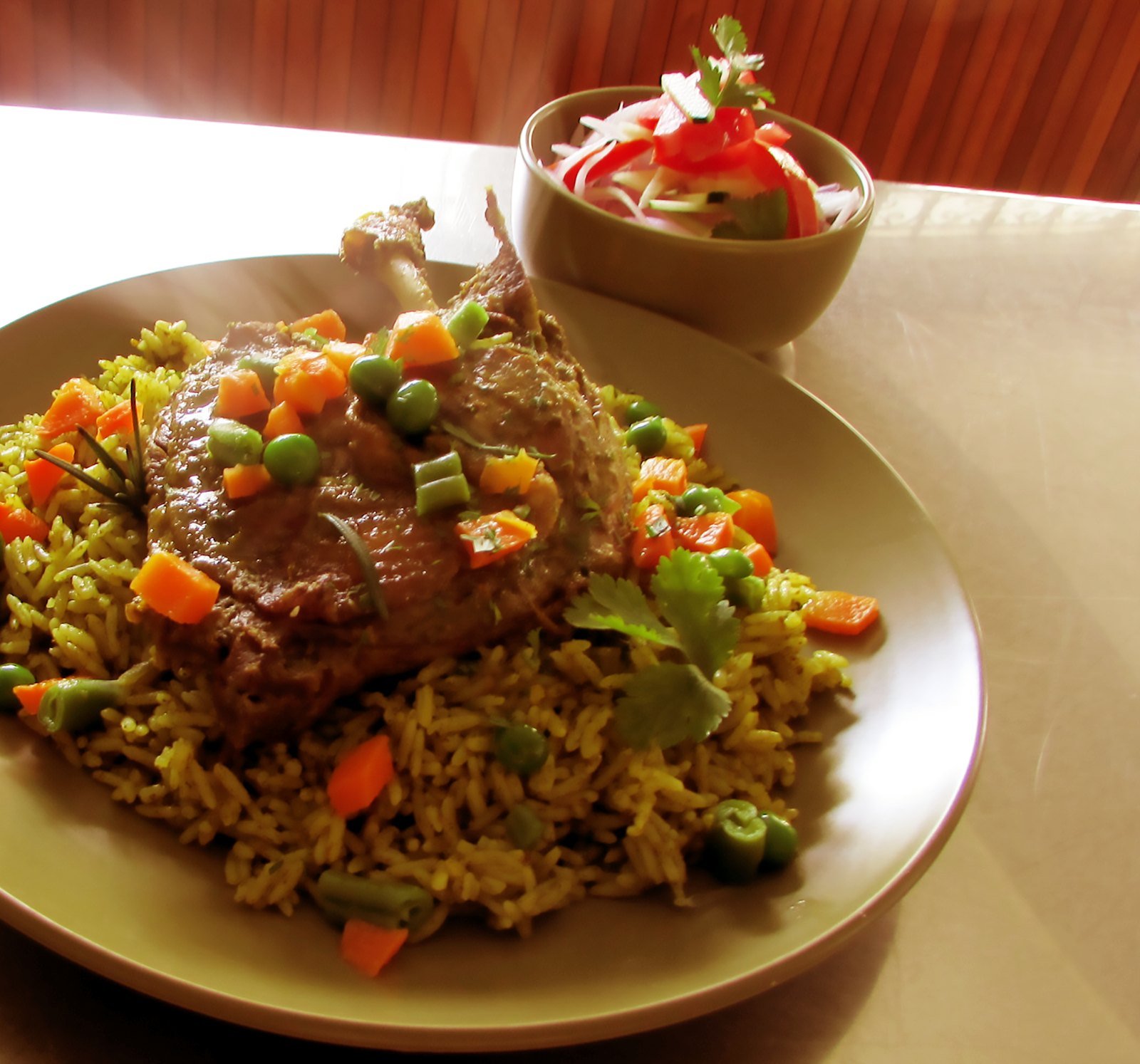
Lambayeque, with Chiclayo as its main city, is known for a greener, more aromatic style of cooking. Arroz con pato is duck cooked with a heap of coriander until the rice turns a deep herbaceous green, often loosened with dark beer. Cabrito a la norteña is young goat, typically marinated with chicha or sour orange and spices, then stewed until it falls apart. The region's calling-card sweet is King Kong, a hefty layered pastry of biscuits and fillings such as manjar blanco (a milk caramel), pineapple and sometimes peanut.
Trujillo
Trujillo, in La Libertad, has a Monday ritual: shambar (also spelled shámbar), a thick wheat and bean soup with pork, ham and ají, generously herbed. It began as hearty food for working people, and it is still the plate that marks the start of the week.
Lima
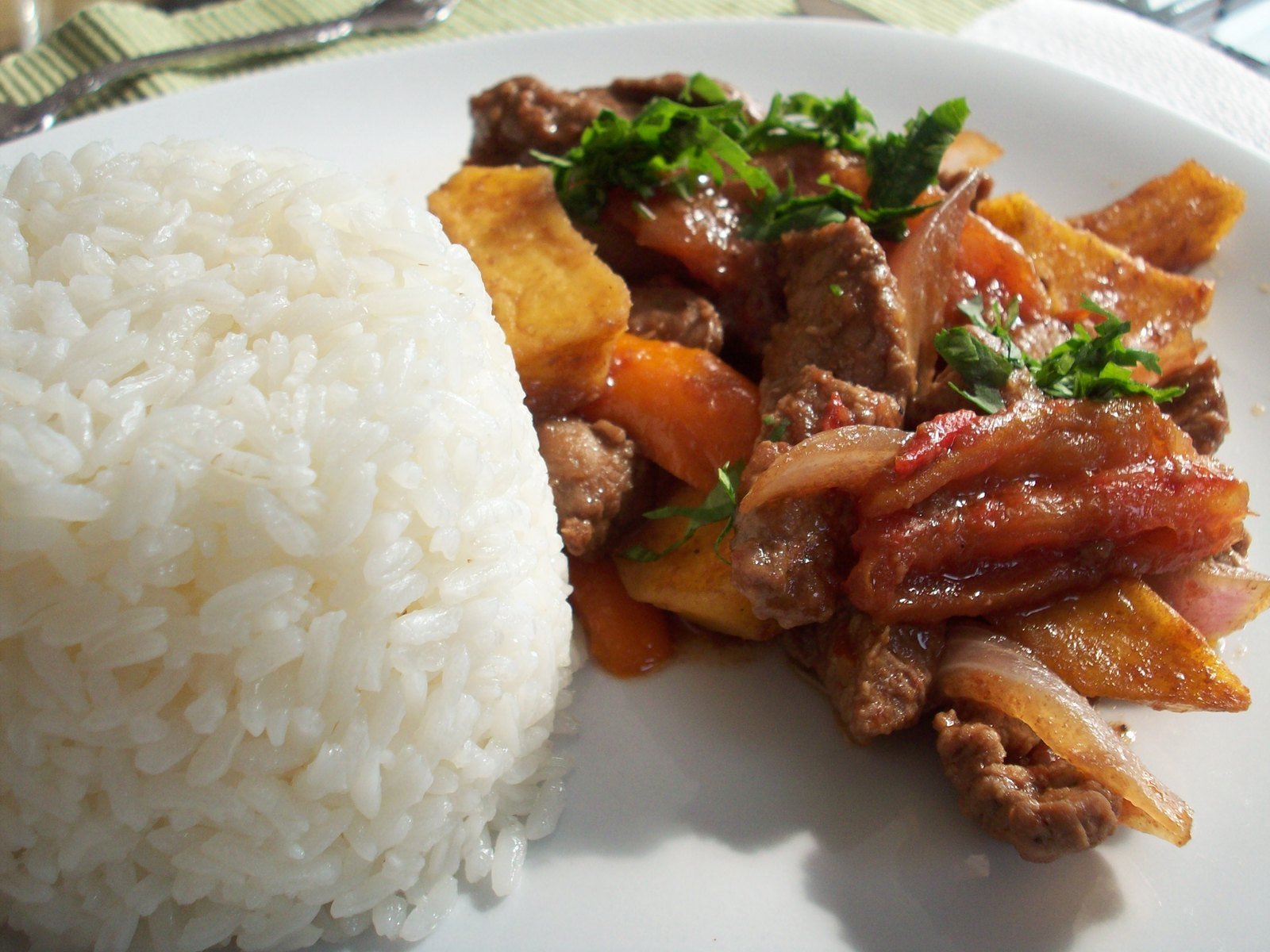
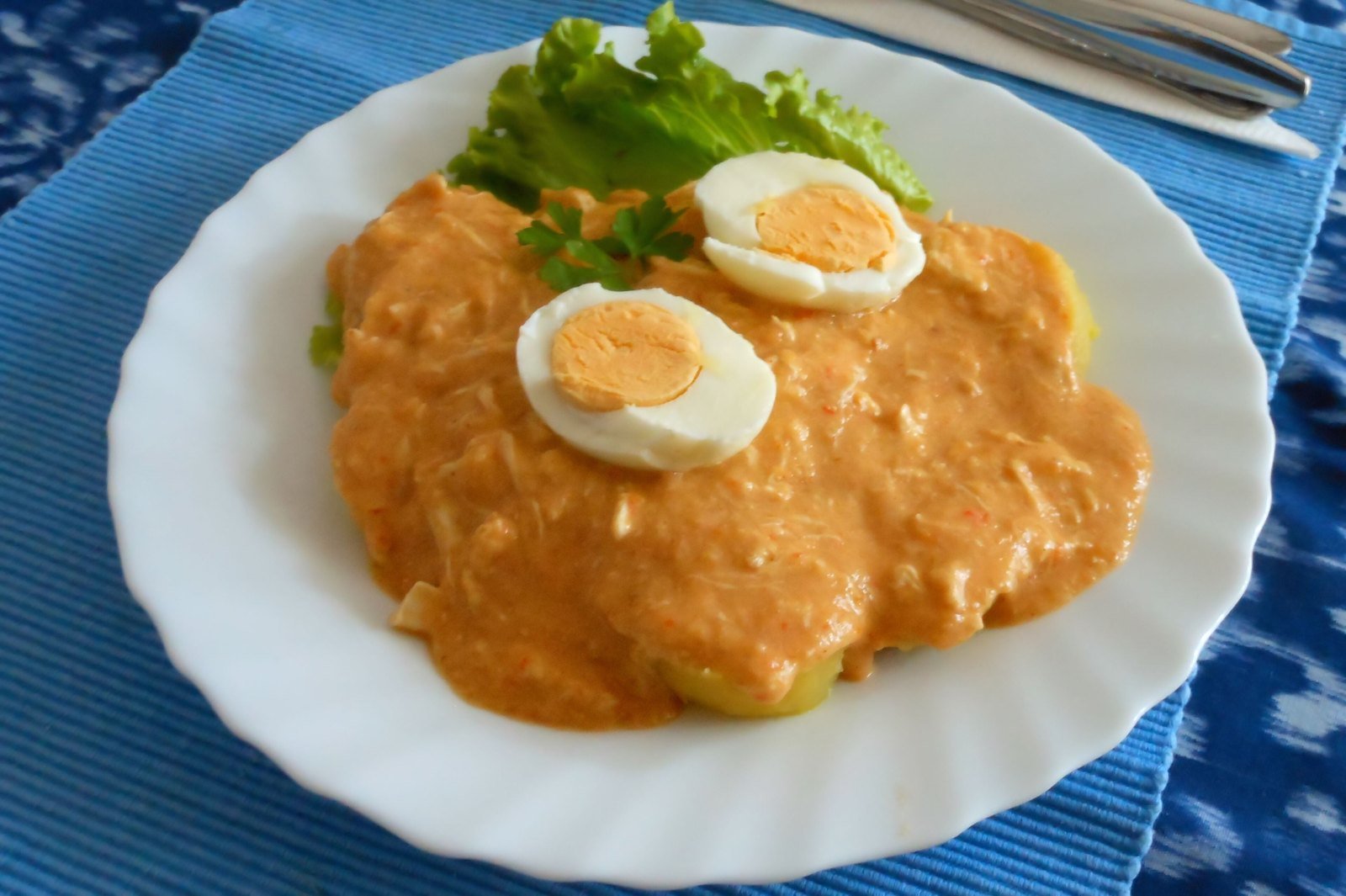
Lima is a capital of immigrants and markets, which is why so many "national" dishes were refined here even when their roots lie elsewhere. Lomo saltado stir-fries strips of beef with onion, tomato and soy sauce, then serves them with both rice and chips: a Chinese-Peruvian idea that has become an everyday Lima plate. Ají de gallina is shredded chicken in a creamy, golden sauce of ají amarillo, bread or nuts, and cheese. Causa is a cold, layered terrine of seasoned mashed yellow potato, filled with tuna, chicken or avocado, sharp with lime. A visitor can find all three almost anywhere in the city, from a corner lunch counter to a white-tablecloth room.
Arequipa
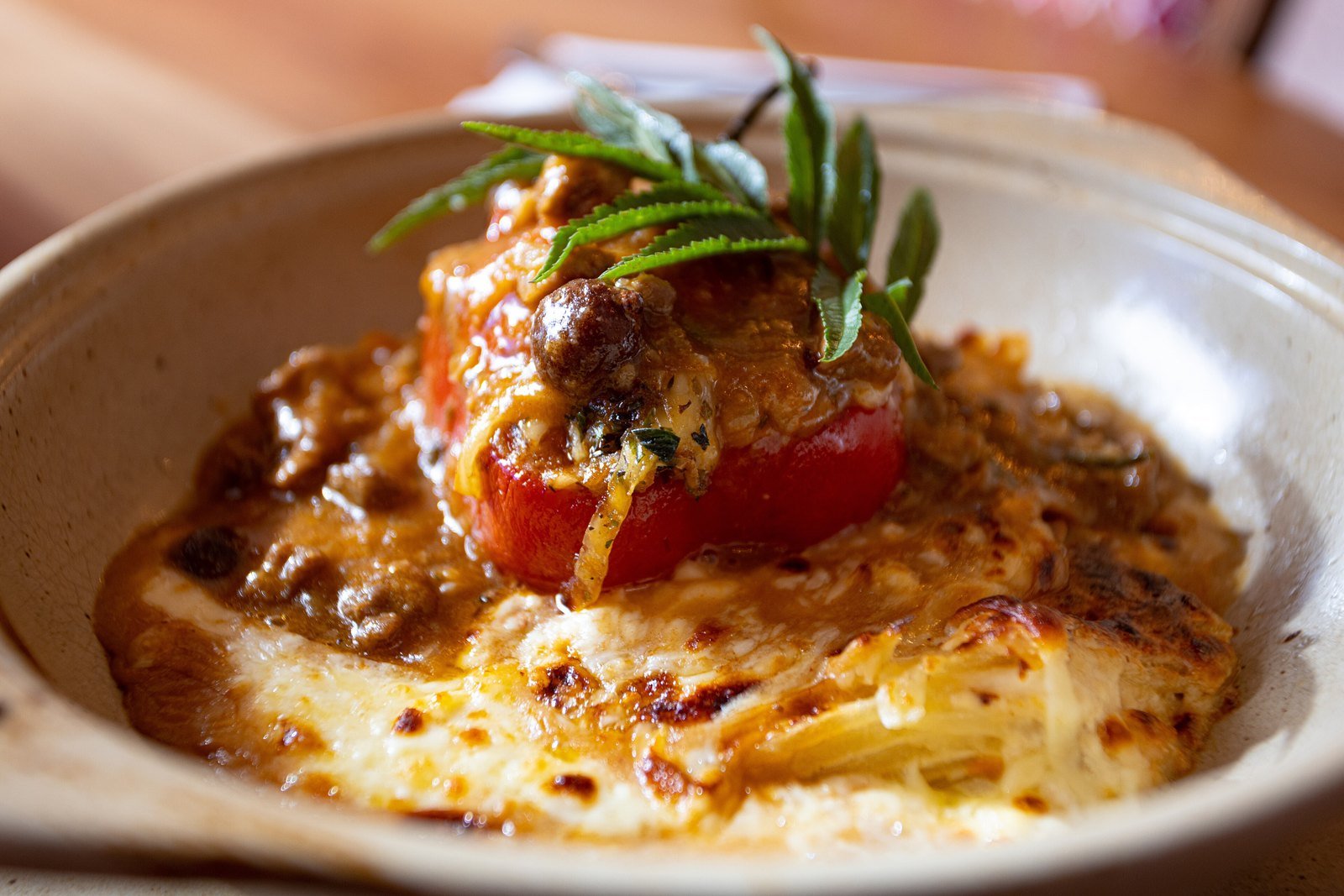
Arequipa's cooking is robust and spicy. Rocoto relleno stuffs the hot rocoto pepper with seasoned meat and cheese, then bakes it. Adobo arequipeño marinates pork in chilli and chicha de jora, and is often eaten on Sunday mornings. The city's chupe de camarones is another reason to go.
Cusco
In the old Inca capital the high-altitude pantry is visible on almost every table: quinoa soups, roasted corn, herbs such as huacatay, and cuy, guinea pig, often roasted whole for festive occasions. Chiriuchu, a cold platter associated especially with Corpus Christi, assembles a cross-section of the region's foods (typically including cuy, chicken, sausages, cheese, corn, seaweed and a crisp tortilla) on a single plate. It is a statement more than a dainty composition: the highlands, the valley and even a memory of the sea, eaten together.
Two great fusions: Nikkei and Chifa
Two encounters now have names that travellers look for on purpose: Nikkei and Chifa.
Nikkei cooking is the Peruvian-Japanese kitchen. On 3 April 1899 the ship Sakura Maru arrived at Callao from Yokohama with 790 Japanese contract labourers, the beginning of a migration that would create one of Latin America's most important Japanese-descended communities. Over the following decades Japanese techniques, including a precise handling of raw fish, met Peruvian produce and seasoning. Tiradito is often read as one fruit of that meeting. So are the rolls that Lima sushi bars made their own, above all the maki acevichado: a roll of fish and avocado, or similar fillings, finished with a creamy, spicy sauce that tastes of ceviche rather than of soy alone. The most internationally celebrated expression of this kitchen is Maido, in Lima, led by the chef Mitsuharu Tsumura (known as Micha). In 2025 The World's 50 Best Restaurants named Maido the best restaurant in the world.
Chifa is older in origin and more thoroughly woven into everyday life. Between the mid-nineteenth century and the 1870s, tens of thousands of Chinese contract labourers, often cited at around 100,000, arrived in Peru, many of them from southern China, to work on plantations, guano islands and railways. When those contracts ended, Chinese cooks and entrepreneurs opened fondas and, later, restaurants. Cantonese techniques met potatoes, ají, local meats and the Peruvian habit of serving rice as a foundation. Arroz chaufa, the beloved fried rice whose name comes from the Cantonese for fried rice, is the most widespread result. Lomo saltado belongs to the same family of ideas, even when it is served in a creole restaurant rather than a Chifa. Wantán (wonton), fried or in soup, is another fixture. Chifa restaurants are now found in cities and small towns across the country.
The street: carretillas, huariques and a little extra
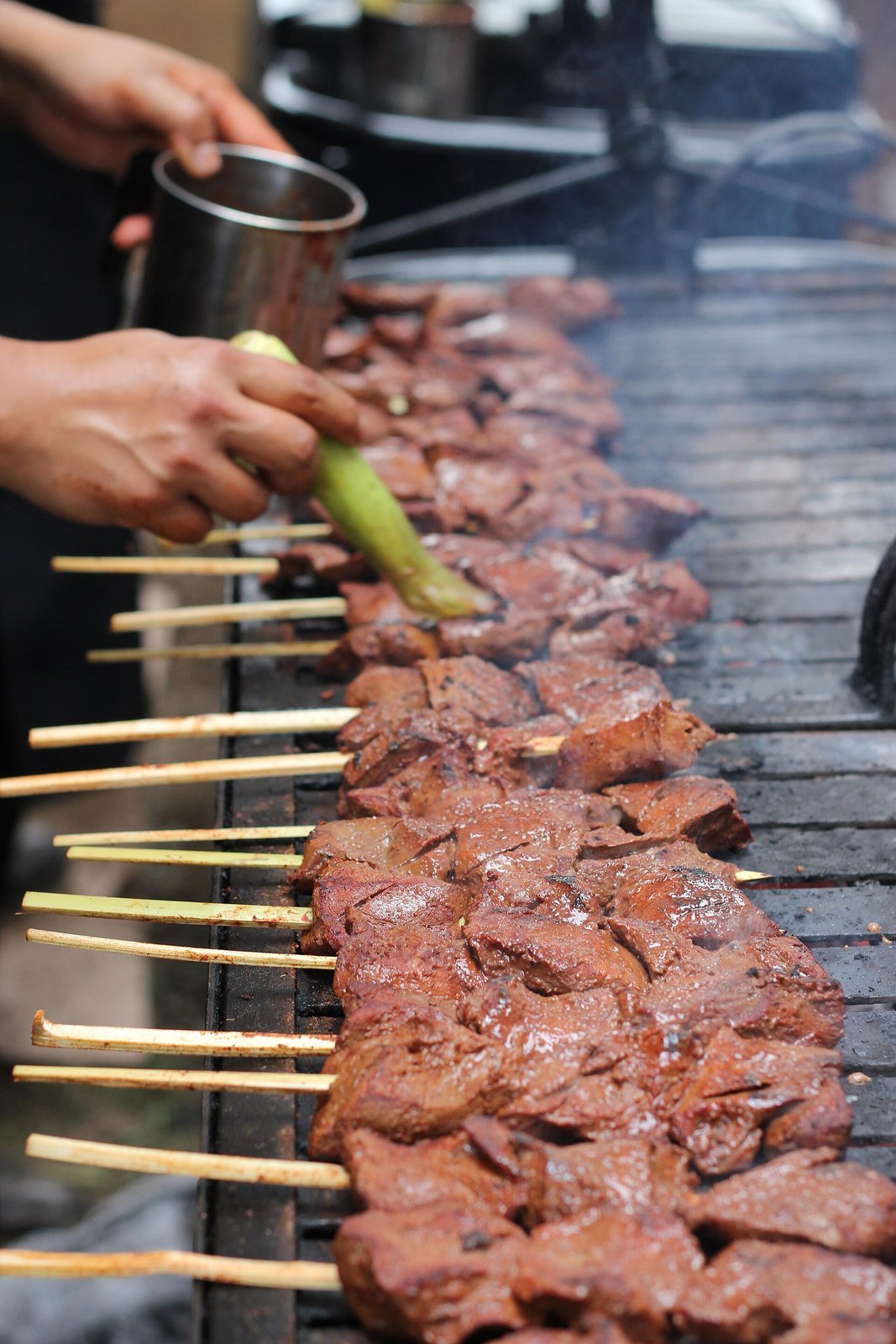
Carretillas are the carts: mobile kitchens that appear at markets, on corners and outside offices at lunch. Puestos ambulantes are the wider family of itinerant stalls. In the evening the smoke of anticuchos , skewers of marinated, grilled beef heart served with potato and a chilli sauce, is one of the characteristic smells of a Peruvian city. In Lima, the cook Grimanesa Vargas, often known as Tía Grimanesa, became one of the best-known specialists, first from a stall and later from a small premises in Miraflores. Picarones, rings of dough made with pumpkin and sweet potato, are fried and drowned in a syrup of chancaca. Salchipapas, sliced sausages with fried potatoes, are a late-night staple. In the morning and again at dusk, vendors pour emoliente, a hot drink of toasted barley, flaxseed and herbs, finished with lime and sugar, from glass tanks on carts.
Peruvians also prize the huarique (sometimes written warique): a modest, often slightly hidden eatery that may do only a few things, and do them extremely well.
Two pieces of lunch-counter Spanish are worth learning before you order. Bien taipá means the portion should be generously heaped, piled higher than a polite serving would be. Yapa, or the affectionate diminutive yapita, is a little extra on the house: another spoonful of stew, a piece of crackling, a splash more juice.
There is also a nickname that often confuses visitors: tía veneno. It does not refer to a single famous cook or to one restaurant. It is a popular, teasing name for a certain kind of informal stall, often run by a woman, selling burgers, oversized sandwiches (sanguchones), salchipapas or fried chicken. The "poison" in the name is a joke about grease and indulgence. People still go, because the servings are large and the prices are low.
What to drink: pisco sour, Inca Kola and chicha
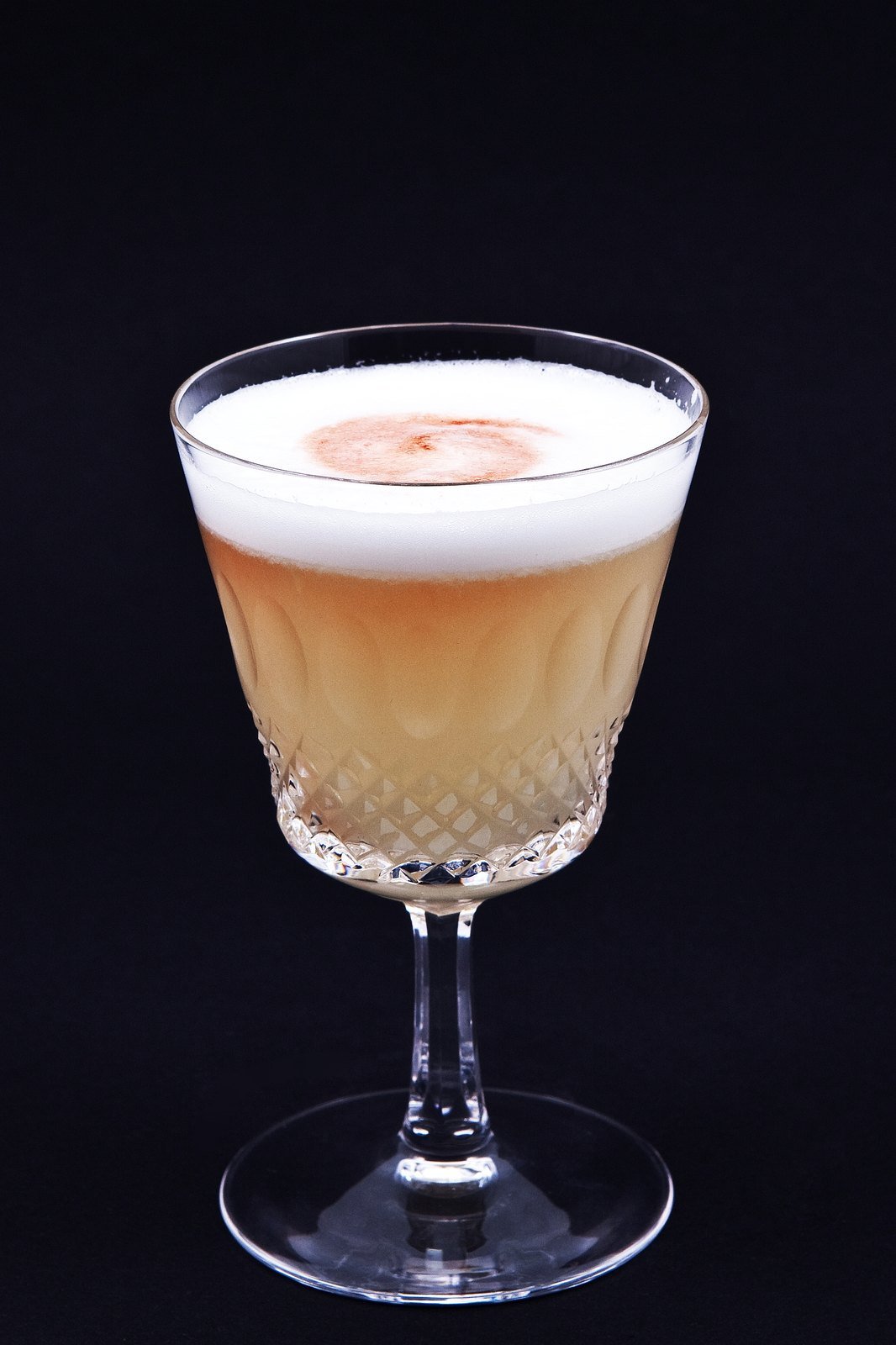
The drink most often placed in a visitor's hand is a pisco sour. Pisco is a grape brandy, and the sour is a cocktail of pisco, lime juice and sugar, shaken with egg white and finished with a few drops of bitters. The version now recognised as a Peruvian classic took shape in Lima in the early twentieth century. The American bartender Victor V. Morris, who opened Morris' Bar in the city in 1916, is widely credited with popularising a pisco sour there; the now-familiar finish of egg white and bitters is often attributed to Mario Bruiget, who worked in that milieu and later at the Hotel Maury.
Then there is Inca Kola, which may be even more important to daily life. The bright yellow soda was launched in Lima in 1935 by the Lindley family, whose bottling business had been founded by the British-born Joseph Robinson Lindley. Its flavour, often compared to bubblegum or to lemon verbena (hierba luisa), is sweet, floral and unique. It is a national habit, and a very common companion to Chifa.
Chicha is a word that covers more than one drink. chicha morada is non-alcoholic: purple corn simmered with pineapple, cinnamon and cloves, then chilled and sharpened with lime. chicha de jora is different: a fermented corn beer of Andean origin, cloudy, lightly sour, and still used in ritual as well as at the table. It is also the marinade that gives character to several northern and Arequipeño meat dishes.
The restaurants the world now queues for
The recent record of Peruvian restaurants is extraordinary, and it helps explain why travellers plan trips around a booking in Lima.
In 2023 The World's 50 Best Restaurants named Central, the Lima restaurant of Virgilio Martínez and Pía León, the best restaurant in the world. Their cooking is organised around Peru's ecosystems and altitudes, and has been closely tied to the research project Mater Iniciativa. Under a rule introduced earlier by the awards organisation, a restaurant that reaches number 1 moves into a "Best of the Best" group and is no longer eligible for later editions of the annual list. Central therefore does not appear in the newer rankings, a mark of honour rather than a fall from favour.
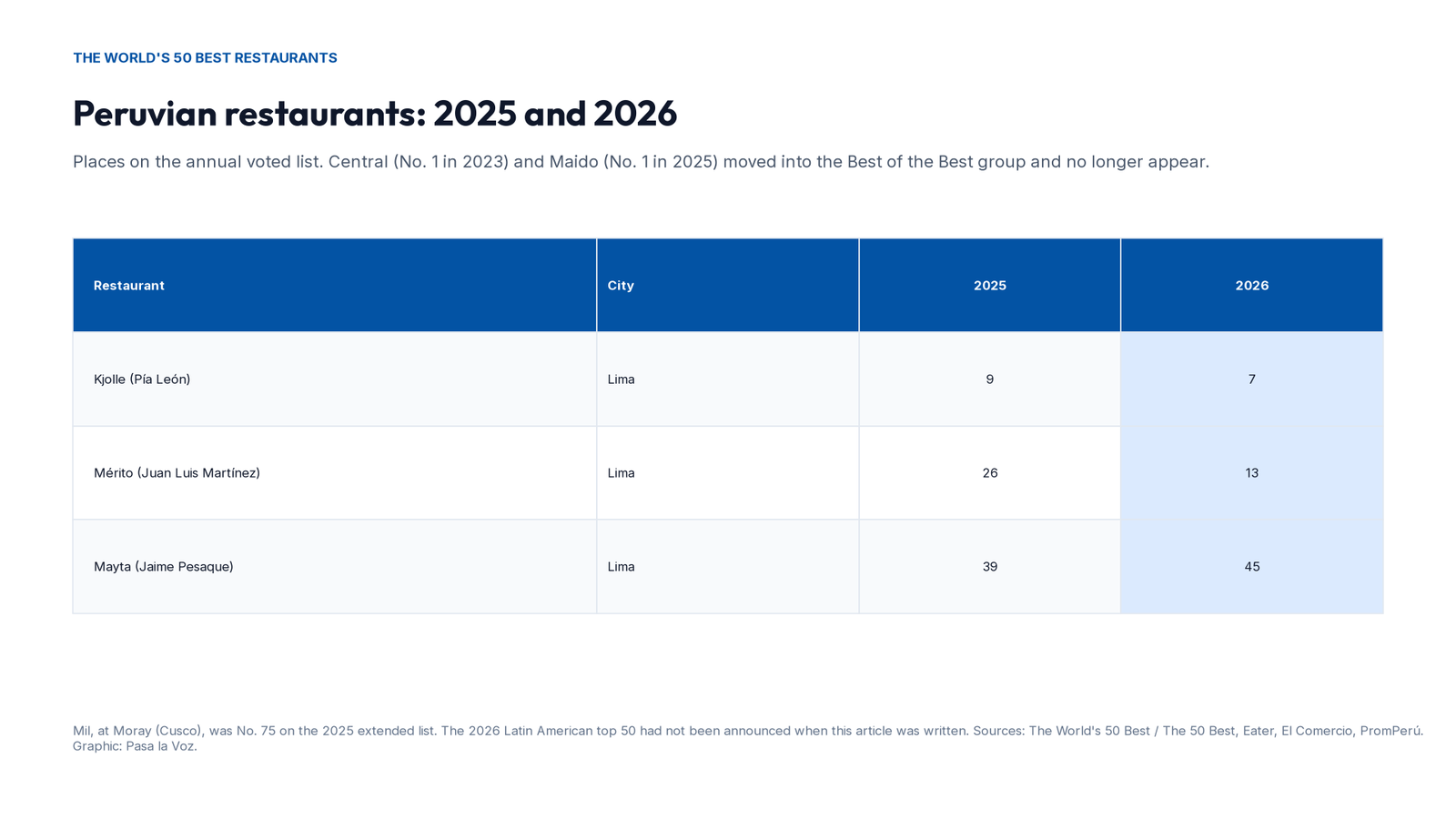
In 2025 the same awards, announced in Turin, gave the top place to Maido, Mitsuharu Tsumura's Nikkei restaurant in Lima. That year Peru also placed Kjolle, Pía León's own restaurant, at number 9; Mérito, led by Juan Luis Martínez, at number 26; and Mayta, Jaime Pesaque's restaurant, at number 39. Virgilio Martínez and Pía León's Mil, at Moray near Cusco, appeared further down the extended list, at number 75.
In 2026 the awards ceremony itself came to Lima, held on 4 November in partnership with PromPerú: the first time in the ranking's history that the event had been staged in Peru. Asador Etxebarri, in Spain's Basque Country, took the number 1 place. Maido, as the previous year's winner, had joined Central in the Best of the Best group and was no longer in the voted list. Three Lima restaurants remained in the top 50: Kjolle rose to number 7, Mérito to number 13, and Mayta was placed at number 45.
A parallel ranking, Latin America's 50 Best Restaurants, tells a similar story. In the 2025 list, announced on 2 December 2025 in Antigua, Guatemala, eight Peruvian restaurants appeared in the top 50: Kjolle at number 2 (and named the best restaurant in Peru); Mérito at 4; Cosme at 9; Mayta at 11; La Mar, Gastón Acurio's celebrated cevichería, at 26; Rafael at 33; Osso at 44; and Mil at 49. Central and Maido were already outside that annual list for the same "Best of the Best" reason. The 2026 Latin American top 50 had not yet been revealed at the time of writing; the ceremony was due to be held on 1 December 2026 in Guadalajara, Mexico.
These rooms have taught international diners to take Peruvian ingredients seriously, but they are not the whole story. A visitor who only eats at the awarded tables will still have seen only a slice of the cuisine.
A feast still waiting to be tasted
For all that attention, Peruvian food remains unevenly spread. In some cities a diner can now find a serious Peruvian kitchen. In many countries around the world, though, the cuisine is still encountered, if at all, as a single ceviche on a pan-Latin menu, or not at all. The gap between what the food has become and how widely it is known is still large.
That gap is also an invitation. Start with a ceviche, a pisco sour and a plate of lomo saltado, then keep going: duck with green rice in the style of Chiclayo, a stuffed rocoto from Arequipa, juane unwrapped from its leaf, a maki acevichado, anticuchos in the smoke of a carretilla, and a glass of chicha morada. Look for a Peruvian restaurant at home if you have one, cook from a well-tested recipe when you do not, and, if you can, go to Peru with an appetite as your itinerary.
The country's cooks, farmers and fishermen have already done the long work of turning a set of regional kitchens into a cuisine the world takes seriously. The next pleasure is to sit down and taste it.